

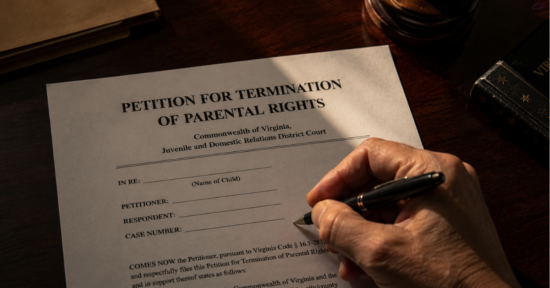
Summary: In Virginia, parental rights can only be terminated in two ways: through a stepparent adoption, or involuntarily through the Department of Social Services after a child is placed in foster care. One parent cannot directly petition the court to terminate the other parent’s rights, and signing over rights does not stop child support obligations unless and until a court formally terminates them. Past-due child support survives termination. This guide explains the full process under Virginia Code § 16.1-283, including the specific statutory grounds, timeframes, and alternatives like custody modification and protective orders.
Parental rights are among the most fundamental legal relationships recognized in the Commonwealth of Virginia. When those rights are at risk, or when you are trying to protect your child from a parent who has stepped out of their life, understanding how Virginia law actually works is critical. This guide covers what parental rights are, how they can be terminated, what termination means for child support, and what your real options are if the other parent is absent, unfit, or simply not paying.
Key Takeaways
- Virginia only allows termination of parental rights through stepparent adoption or DSS-initiated proceedings (involuntary) under Virginia Code § 16.1-283.
- A parent cannot file a petition to terminate the other parent’s rights directly.
- Signing over parental rights does not stop child support until a court formally terminates rights, and arrears (past-due support) are not erased.
- Six months of no contact with a child in foster care can constitute prima facie evidence supporting termination; along with the failure of the parent to remedy conditions that led to placement within a reasonable period of time, not to exceed 12 months
- A child aged 14 or older can object to termination, and the court generally cannot override that objection absent a disability finding.
- Once all appeals are exhausted, termination is permanent and can only be revisited as authorized under Virginia Code §16.1-283.2
- Alternatives to involuntary termination include custody modification, protective orders, mediation, and consenting to a stepparent adoption.
—
What Does Terminating Parental Rights Mean?
Terminating parental rights means fully and permanently severing the legal relationship between a parent and their child. Once parental rights are terminated, the parent and that parent’s family members become legal strangers to the child. The parent no longer has any right to custody, visitation, or contact.
Termination also eliminates the parental responsibilities going forward. A parent whose rights have been terminated can no longer be required to pay future child support, cannot be asked to provide financial support, and has no standing to make decisions about the child’s upbringing, education, or medical care. The only remaining connection is biological.
One parent’s rights may be terminated without affecting the rights of the child’s other parent. Virginia courts handle each parent’s situation independently.
Can One Parent Terminate the Other Parent’s Rights in Virginia?
This is the most common question Virginia family law attorneys hear, and the answer is usually not what people want to hear. No, one parent generally cannot petition the court to terminate the other parent’s rights directly. Virginia law does not give a private parent a vehicle to walk into court and ask a judge to end the other parent’s legal relationship with their child, even when that parent has been absent for years, has not paid child support, or is a negative influence.
There are only two pathways to termination in Virginia:
- Stepparent adoption. A new spouse adopts the child, which terminates the other biological parent’s rights as part of the adoption process. This is the only voluntary route.
- Involuntary termination initiated by the Virginia Department of Social Services. This requires the child to already be in foster care, or in the custody of a child-placing agency, and is governed by Virginia Code § 16.1-283.
If neither of those situations applies, the path forward is usually not termination. It is modifying custody, restricting visitation, or pursuing a protective order. More on those alternatives below.
Voluntary Termination of Parental Rights in Virginia
Many parents come in asking whether they can simply sign a document giving up their parental rights, especially if the goal is to avoid paying child support. Virginia law does not allow this. The only voluntary pathway to termination is a stepparent adoption.
A stepparent adoption requires the spouse of the parent retaining custody to formally adopt the child and assume full legal, financial, and parental responsibility for that child as if they were the child’s own biological parent. Without a stepparent willing and able to adopt, Virginia courts will not permit a voluntary termination of parental rights.
Why Virginia Will Not Let You Just Walk Away
The reason comes down to money and the child’s welfare. Virginia does not want to create a situation where a child has only one legal parent who could predecease them, leaving the child a ward of the Commonwealth. The state wants to ensure there is always a second party legally responsible for supporting that child, financially and otherwise. If a parent could simply sign away their rights, the cost of raising that child could fall on Virginia taxpayers.
Once this is explained, most parents understand the position the law takes, even if they disagree with it. The good news is that there are often better legal tools available than termination for the underlying problem.
Does Signing Over Parental Rights Stop Child Support?
Short answer: only if termination is finalized through a stepparent adoption or a court order, and only going forward. Past-due child support is not erased.
Here is what actually happens:
- Until rights are formally terminated by a court, child support obligations continue. Saying you want to give up your rights, signing a private agreement with the other parent, or simply walking away does not stop the child support obligation. Child support enforcement, wage garnishment, and arrears will continue.
- Once a stepparent adoption is finalized, the biological parent whose rights were terminated no longer has an obligation to pay child support going forward. The adoptive stepparent takes on that financial responsibility.
- Once an involuntary termination is finalized, future child support obligations end as well, but this only happens in the foster care context and is not something a parent can opt into.
- Arrears (past-due child support) survive termination. If you owed back child support at the time your rights were terminated, you still owe it. Termination is not a way to wipe out a child support debt.
For most parents asking whether they can sign over their rights to stop paying child support, the honest answer is that the law does not provide that option unless there is a stepparent in the picture who is willing to adopt.
Involuntary Termination of Parental Rights Under Virginia Code § 16.1-283
Involuntary termination proceedings are initiated by the Virginia Department of Social Services after the child has been placed in foster care. A private parent cannot use § 16.1-283 to terminate the other parent’s rights. The court must find, based on clear and convincing evidence, both that termination is in the best interests of the child and that one or more statutory grounds are met.
Abuse or Neglect (§ 16.1-283(B))
Where a child has been found neglected or abused and placed in foster care, the court may terminate parental rights if the neglect or abuse presented a serious and substantial threat to the child’s life, health, or development, and it is not reasonably likely that the conditions causing the neglect or abuse can be substantially corrected within a reasonable period of time to allow the child’s safe return.
Prima facie evidence of this ground includes situations where a parent has a mental or emotional illness or intellectual disability of such severity that there is no reasonable expectation they can care for the child appropriately, where a parent has habitually abused alcohol, narcotics, or other dangerous drugs to the extent that parental ability is seriously impaired and the parent has not responded to treatment, or where the parent has failed without good cause to respond to rehabilitative efforts by social services, medical, or mental health agencies.
Failure to Maintain Contact or Plan for the Child’s Future (§ 16.1-283(C))
This is one of the most frequently litigated grounds. If a child is in foster care, parental rights may be terminated where the parent, without good cause:
- Has failed to maintain continuing contact with the child and failed to plan for the child’s future for a period of six months after the child’s placement in foster care, despite reasonable efforts by agencies to communicate and strengthen the parent-child relationship; or
- Has been unwilling or unable within 12 months of the child’s foster care placement to substantially remedy the conditions that led to the child’s removal, notwithstanding reasonable rehabilitative efforts by DSS and other agencies.
Failing to communicate on a continuing, planned basis for six months constitutes prima facie evidence of the contact ground. Parents who have not seen the child in years, or who have consistently failed to engage with their foster care plan, are particularly at risk under this section.
How Long Does a Father (or Mother) Have to Be Absent to Lose Parental Rights in Virginia?
The most commonly cited statutory window is six months of no continuing, planned contact with a child who is in foster care. That creates prima facie evidence supporting termination under § 16.1-283(C). The 12-month window applies to a parent’s failure to remedy the conditions that led to the foster care placement.
Important: these timeframes apply only when the child is already in foster care. Absence from a child who is in the custody of the other parent, even for years, is not itself a ground for termination under Virginia law. It can, however, support a custody modification or a stepparent adoption where another adult is ready to step in.
Abandonment (§ 16.1-283(D))
Where a child has been found neglected or abused on the grounds of abandonment, the court may terminate parental rights if the child was abandoned under circumstances where the identity or whereabouts of the parent cannot be determined, the parent or relatives have not come forward to identify the child or claim a relationship within three months of an order placing the child in foster care, and diligent efforts to locate the child’s parent, guardian, or relatives have been made without success.
Prior Terminations and Serious Criminal Convictions (§ 16.1-283(E))
Virginia law also permits termination based on the parent’s prior conduct toward other children. This ground applies when:
- The parental rights of the parent regarding a sibling of the child have been previously and involuntarily terminated;
- The parent has been convicted of murder or voluntary manslaughter (or a felony attempt, conspiracy, or solicitation) where the victim was a child of the parent, a child in the home, or the child’s other parent;
- The parent has been convicted of felony assault or felony sexual assault resulting in serious bodily injury to a child of the parent or a child in the home; or
- The parent has subjected any child to aggravated circumstances, defined as torture, chronic or severe abuse, or chronic or severe sexual abuse that either shows wanton or depraved indifference to human life or has resulted in a child’s death or serious bodily injury.
DSS is not required to make reasonable efforts toward family reunification in all of these circumstances, except where the parent’s rights surrounding a sibling have been previously and involuntarily terminated.
The “Best Interests of the Child” Standard
Regardless of which ground is alleged, Virginia courts always apply the best interests of the child as the overarching standard. No petition seeking termination of residual parental rights will be accepted by the court until a foster care plan has been filed under § 16.1-281 documenting that termination is in the best interests of the child.
Courts consider a wide range of factors in this analysis, including the child’s age and developmental needs, the quality of the bond between parent and child, the parent’s history of compliance with court orders and service plans, the stability of the proposed placement, and the child’s need for permanency.
Can a Child Object to Termination?
This is a detail most Virginia family law articles miss entirely. Under § 16.1-283(G), residual parental rights shall not be terminated if the child is 14 years of age or older (or otherwise of an age of discretion as determined by the court) and objects to the termination. The child’s objection creates a significant procedural bar.
Even a child aged 14 or older can have rights-termination proceed over their objection if the court finds that a disability reduces the child’s developmental age such that they are not truly of an age of discretion.
What Happens After Parental Rights Are Terminated?
Once a court enters a final order terminating parental rights, custody is transferred to a local board of social services, a licensed child-placing agency, or in some cases a person with a legitimate interest such as a relative. The court gives priority consideration to placing the child with a person with a legitimate interest, and if that option is not chosen, the judge must explain the basis for that decision.
Where DSS or a licensed agency receives authority to place the child for adoption, they are required to file Adoption Progress Reports with the juvenile court every six months from the date of the termination order until a final adoption order is entered. This accountability mechanism helps ensure that termination actually leads to permanency for the child rather than indefinite foster care.
What Termination Does Not Do
It is important to understand what termination of parental rights does not accomplish:
- It does not erase past-due child support owed at the time of the termination order.
- It does not affect the other parent’s rights, which remain intact and unchanged.
- It does not automatically resolve other open custody disputes. The court addresses related issues as part of the termination order.
- It does not happen quickly. Even in straightforward cases, termination proceedings often take a year or more.
Alternatives to Terminating Parental Rights
Terminating another parent’s rights is not the only way to resolve difficult custody and visitation situations. In many cases, there are more practical and achievable alternatives, especially in situations short of abuse and neglect.
Modification of custody or visitation orders. If a parent is absent, disengaged, or a negative influence, the court can significantly restrict visitation or award sole legal and physical custody to the other parent without terminating the absent parent’s rights altogether.
Mediation and informal settlement. Custody disputes are stressful and expensive. For many families, mediation or an informal settlement agreement can resolve practical issues around parenting time and decision-making without litigation.
Stepparent adoption. Where a spouse is willing to adopt, this is the one voluntary pathway to terminating the other biological parent’s rights and creating a clean, stable legal family unit.
Protective orders and guardian ad litem proceedings. In high-conflict or unsafe situations, the court can issue protective orders or appoint a guardian ad litem to independently represent the child’s interests, leading to meaningful protections without full termination.
How Long Does the Termination Process Take?
The termination of parental rights in Virginia is not a quick process. Before a petition is even filed, DSS must investigate the family, develop a foster care plan, and offer rehabilitative services. After filing, there are hearings, service of process on all parties including foster parents, relatives, and pre-adoptive parents who have notice rights, possible guardian ad litem involvement, and ultimately a full evidentiary hearing.
From initial removal to a final termination order can take anywhere from one to two years or more, depending on the complexity of the case and how quickly parents respond to their foster care plans. The 12-month window for remedying foster care conditions means that parents who are actively working their plan should prioritize immediate, consistent engagement.
What If Parental Rights Are Wrongly Terminated?
Parents who believe their rights were terminated in error have appeal rights through the Court of Appeals of Virginia and, ultimately, the Supreme Court of Virginia. It is critical that appeals be filed promptly and within applicable deadlines. Once all appeal rights have been exhausted, the termination is permanent. Courts have held that a parent who has exhausted appeals is no longer a “party with a legitimate interest” under Virginia Code § 16.1-241(a) and cannot bring future motions regarding the child unless their rights have been restored.
This makes having experienced legal representation at every stage essential, not just at the initial hearing but through the appellate process.
Frequently Asked Questions
If I sign over my parental rights, do I still have to pay child support in Virginia?
You still owe child support until a court formally terminates your rights, which in Virginia happens only through a stepparent adoption or an involuntary termination under § 16.1-283. Walking away, signing a private agreement, or telling the other parent you give up your rights does not stop the obligation. Once termination is final through a stepparent adoption, future child support stops, but any past-due support (arrears) you already owed remains owed.
Can I voluntarily give up my parental rights in Virginia?
Only through a stepparent adoption. Virginia does not allow a parent to simply sign a form or file a petition giving up parental rights on their own. A new spouse of the other parent has to be willing and qualified to adopt the child and take on full legal and financial responsibility.
Can I terminate my ex’s parental rights because they don’t pay child support or are absent?
Not directly. Virginia law does not let one parent petition to terminate the other parent’s rights. If the other parent is absent or unfit, the more realistic legal tools are modifying custody to sole legal and physical custody, restricting or supervising visitation, pursuing a protective order if there is a safety issue, or pursuing a stepparent adoption if you have remarried.
How long does a father have to be absent in Virginia to lose his parental rights?
The six-month and 12-month statutory windows in Virginia Code § 16.1-283(C) apply when a child is already in foster care, not when the child is in the custody of the other parent. Absence from a child in the other parent’s custody, even for years, is not by itself a ground for termination, though it can support a custody modification or a stepparent adoption.
Does terminating parental rights erase back child support?
No. Termination ends the obligation to pay child support going forward, but arrears that accrued before termination remain enforceable and collectible.
Are there termination of parental rights forms in Virginia I can just fill out?
The Virginia court system uses form DC-531 for petitions to terminate residual parental rights, but it is filed in juvenile and domestic relations district court as part of a formal proceeding, typically initiated by DSS or in connection with a stepparent adoption. There is no self-serve form a parent can submit to give up their own rights or request the other parent terminate his or her rights.
Can a child object to having a parent’s rights terminated?
Yes. Under § 16.1-283(G), if the child is 14 or older or otherwise of an age of discretion as determined by the court, and they object, the court generally cannot terminate parental rights. The court can override the objection only if it finds that a disability reduces the child’s developmental age.
Can termination of parental rights be reversed?
Reversal is possible only through a successful appeal to the Court of Appeals of Virginia or the Supreme Court of Virginia, and only if it is filed within applicable deadlines, unless the circumstances under Virginia Code § 16.1-283.2 are met. Otherwise, once all appeals are exhausted, the termination is permanent and the parent has no standing to bring future motions regarding the child.
Do You Need a Virginia Family Law Attorney?
Yes. Whether your parental rights are at risk, you are facing a termination petition, you are considering a stepparent adoption, or you are trying to protect your child from an unfit or absent parent, these are among the most consequential proceedings in Virginia family law. The clear and convincing evidence standard is demanding, the procedural requirements under § 16.1-283 are complex, and the wrong move early on can have permanent consequences.
At Rinehart Bryant, PLLC, we represent Virginia parents in termination of parental rights proceedings, custody and visitation disputes, stepparent adoptions, and child support matters. If you are facing a termination petition, the clock is already running on the statutory windows. Contact us today to schedule a consultation with a Virginia family law attorney.


Caitlyn Stubbs
Latest posts by Caitlyn Stubbs (see all)
- How Is Military Retirement Pay Handled in a Virginia Divorce? - July 16, 2026

